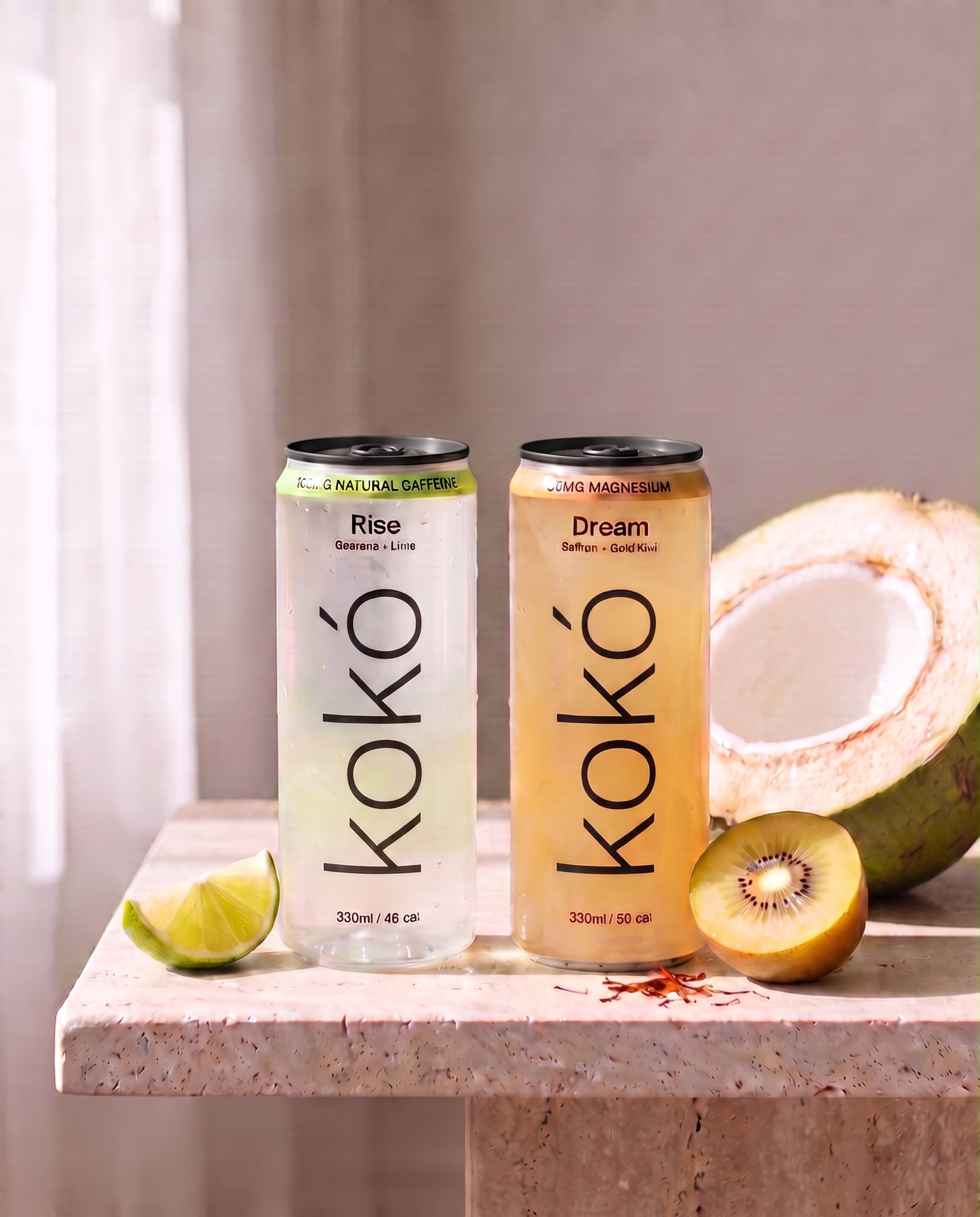
Young Thai coconut water, with the doses printed on the front. Rise for the morning: 100mg of natural caffeine from guarana. Dream for after four: 80mg of magnesium and saffron. Clear can, no added sugar, about 50 calories, nothing to mix.

Ready to ditch the morning routine?
Last step. Put your name down and we'll come back to you when there's a can to open.
One email when there's a can to send. If you know someone with a drawer full of sachets, send them this page.

100mg of caffeine, about a large flat white, from Brazilian guarana seed. 70% young Thai coconut water. The other 30% is filtered water and lime, nothing else, which is how it lands at about 10g of natural sugar instead of 15. Potassium from the coconut, sodium from pink salt, B vitamins.
48 calories a can. A 250ml energy drink is about 115.
80mg of magnesium as bisglycinate, the chelated form. 30mg of saffron. Gold kiwi. Half young coconut water, half a brewed infusion of chamomile, lemon balm and tulsi. Zero caffeine, no added sugar, and it pours gold.
50 calories a can. A glass of wine is about 125. A small iced coffee, more.
Founding members get the first 12-packs from the 5,000-can pilot at cost, and that price for the first 12 months. Public price is A$54 a 12-pack. 500 spots, never repeated. You also pick which can we make first.
Coconut water comes from young green coconuts, picked at six to seven months, before the flesh thickens and the shell goes brown. That's when the water is at its best: light, faintly sweet, and carrying the electrolytes the tree put there. Wait for the brown coconut and you get less water, more sugar and a heavier taste. We only use the young green ones, Nam Hom from Thailand, never from concentrate. Then we add the two things a coconut can't make.
What the young coconut brings
Potassium, from the coconut alone. Young coconut water is one of the richest natural sources of potassium there is, which is exactly why people tear sachets into it. It also carries magnesium, calcium and phosphorus in the amounts a plant makes them, not a factory.
Naturally low in sugar, no added anything. Picked young, the water is faintly sweet rather than syrupy. That's the whole reason it works as a base: it hydrates, it tastes clean, and it leaves room for what we put in.
What we add
Natural caffeine from guarana, in Rise. A large flat white's worth, from Brazilian guarana seed. Plus 190mg of sodium from pink salt, because sodium is the one electrolyte coconut water is short on and the one you sweat out most. That's the sachet's whole job, done.
Magnesium bound to glycine, in Dream. Most cheap magnesium is oxide, poorly absorbed and hard on the stomach. Bisglycinate is chelated to an amino acid, better absorbed and easy to take in a drink. It's the form people pay for in capsules. We put it in the can, with saffron and gold kiwi.
Almost every energy drink in the fridge runs on synthetic caffeine: caffeine anhydrous, a white powder made in a chemical plant, dosed in with the sugar and the colour. Rise runs on the seed.
Pure caffeine, nothing around it. It hits fast, it's cheap, and it arrives with 26g of sugar and a syrup base to carry it. The spike people talk about is the caffeine and the sugar landing together.
Guarana is an Amazonian seed with two to four times the caffeine of a coffee bean by weight. In the seed, that caffeine sits alongside the plant's own theobromine, theophylline and tannins, the same family of compounds you get in cacao and tea. We use a whole-seed extract, standardised so every can lands at exactly 100mg, and tested batch by batch for caffeine and heavy metals.
Because the caffeine comes bound up with the seed's tannins and there's no sugar spike underneath it, people describe guarana as a steadier lift than the jolt and drop of a synthetic can. Same caffeine, different company.
Straight answer on caffeine: 100mg is 100mg wherever it comes from. What changes is what comes with it and what doesn't. Rise is a formulated caffeinated beverage under Australian food law, not recommended for children or people sensitive to caffeine.
Every one of these is a thing to buy, remember, measure and wash up. The doses don't change. The friction does.
Nothing to mix, nothing to dose, nothing to remember. The coconut did most of it before we got there.
Amounts are formulation targets. Final numbers come from independent lab analysis of the actual can before anything is printed.
Two of us built this. The wellness routine everyone prescribes gets harder every year: the tablet at one end of the day, the sachet at the other, the powder you forget, the shaker in the sink, and the quiet feeling you're failing at something that should be simple. We didn't want another product on the bench. We wanted fewer. Two cans, the right doses already inside, open one in the morning and one after four.
Straight up: there's nothing to buy yet. The founding 500 get the first cans, early 2027, and they tell us which one to make first.
Steve Veleski and Daniel Pantelic, co-founders. Melbourne.